Article
Production of bent sheet metal parts
How the press brake bending process works, how the tools affect the part, and why rolling direction matters for the quality of bent parts.
Process
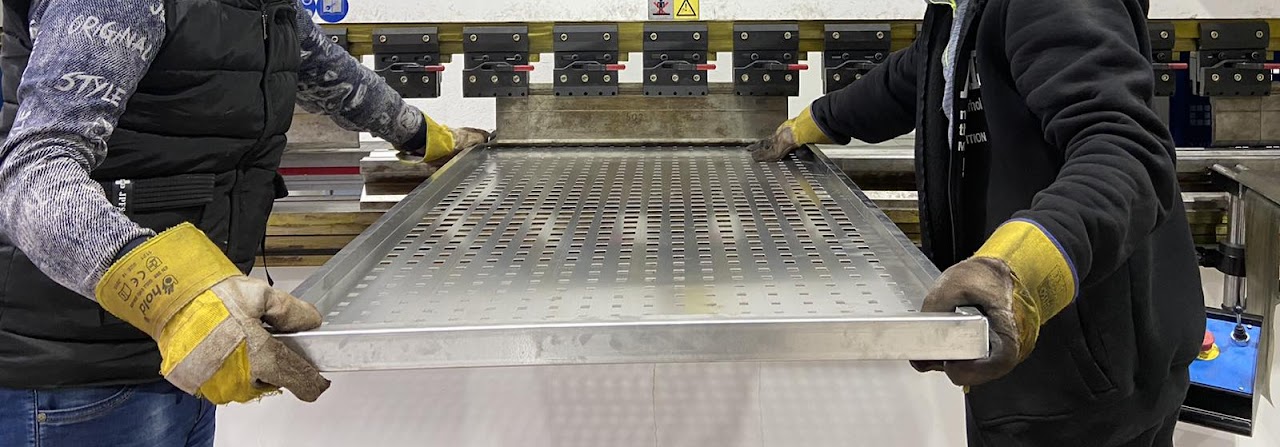
Press brake bending process
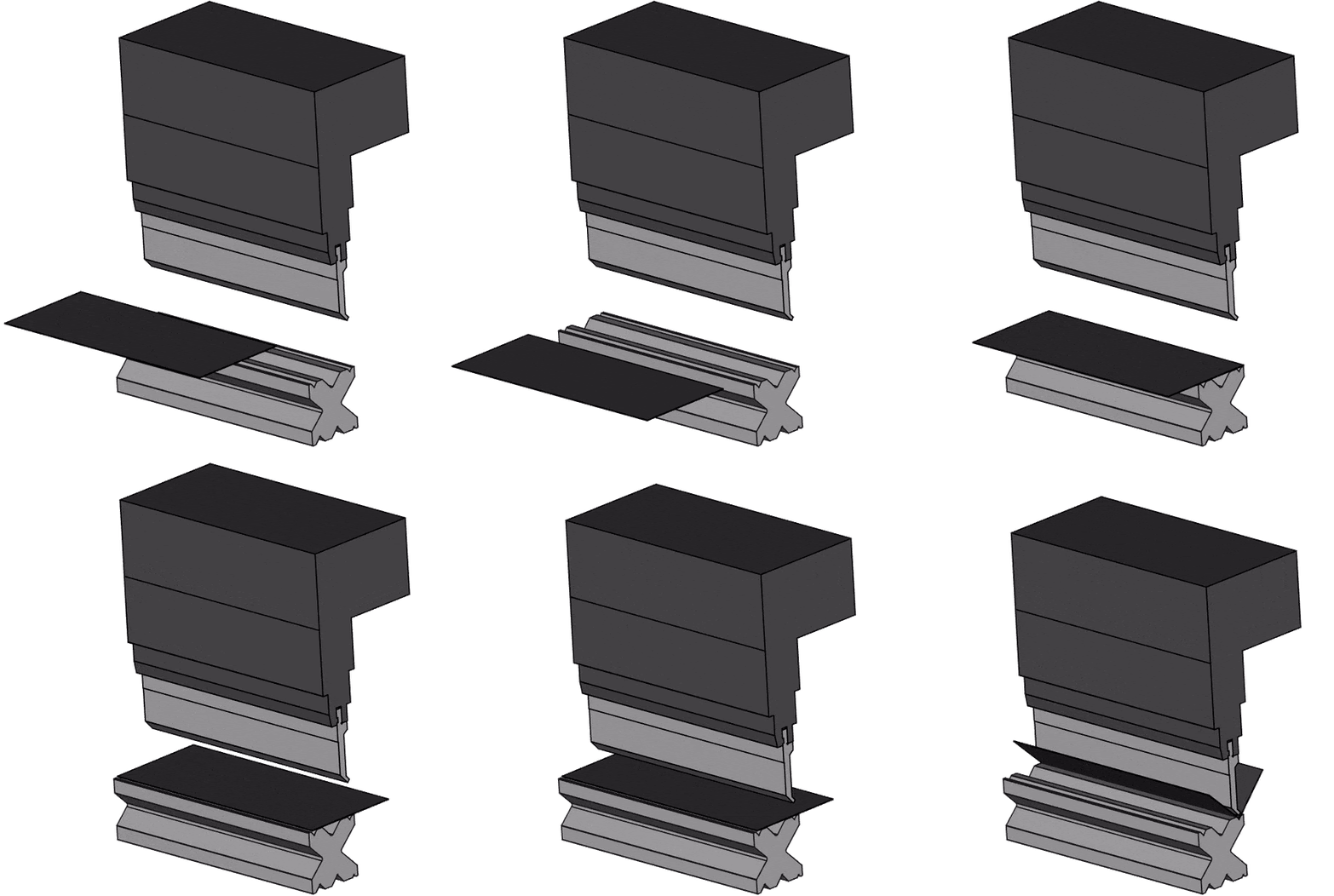
To produce bent parts, a bending machine, or press brake, is used. The press brake has an upper and lower tool. The upper tool, the punch, presses into the lower tool, the die.
The sheet is placed between the two tools. The punch descends with a defined pressing force and presses the sheet metal toward the die. The die works with the same pressing force, but in the opposite direction. In this way, the sheet metal is bent into the required shape. The required die is selected and installed depending on the specific bending radius.
Quality
What affects bending
Bending marks
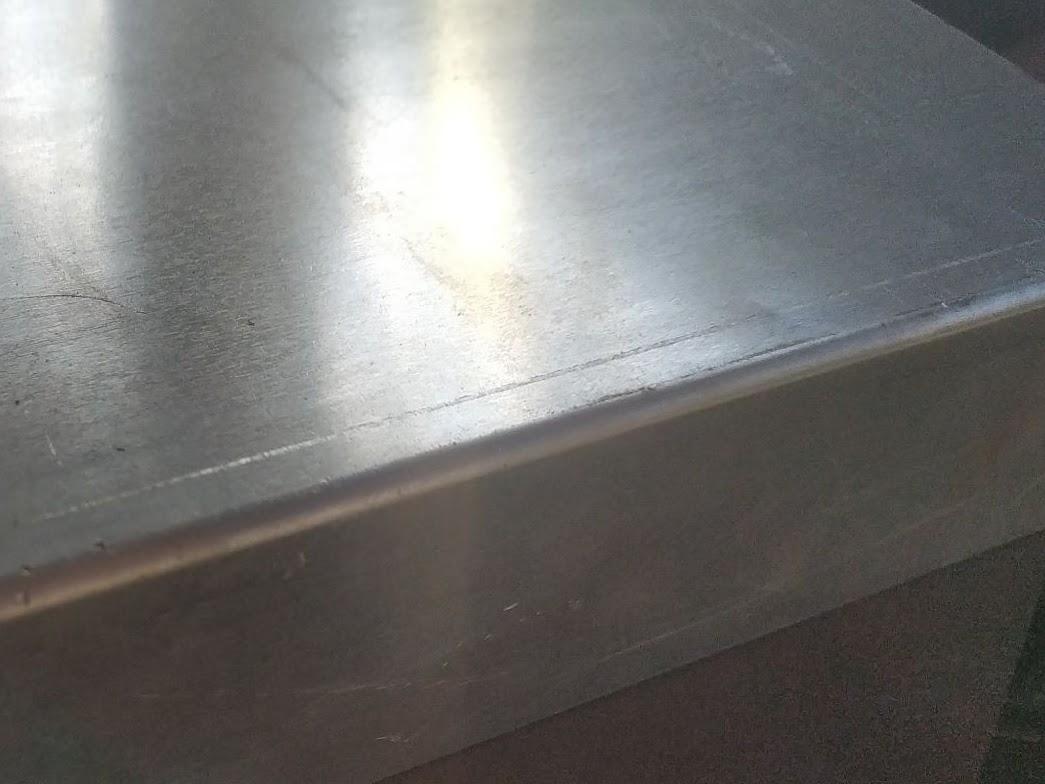
When parts are bent with a press brake, the bending dies can leave edge marks on the surface of the part. In addition, small scratches, grooves, and dents can be caused by the pressure of the punch when it contacts the sheet metal. In these situations, a silicone strip can be used to prevent these small defects. Using a flexible silicone strip is therefore recommended, especially for parts that must meet high visual requirements.
Rolling direction when bending sheet metal
In the production of sheet metal parts, large rolled stock plates are cast from different metals such as copper, steel, stainless steel, or aluminum. They are then processed into sheets by rolling. The metal is stretched, creating a fibrous material structure.
The orientation of the fibers always depends on the rolling direction. Because the material is stronger in the rolling direction, this direction is a factor that must be considered for the quality of bent parts.